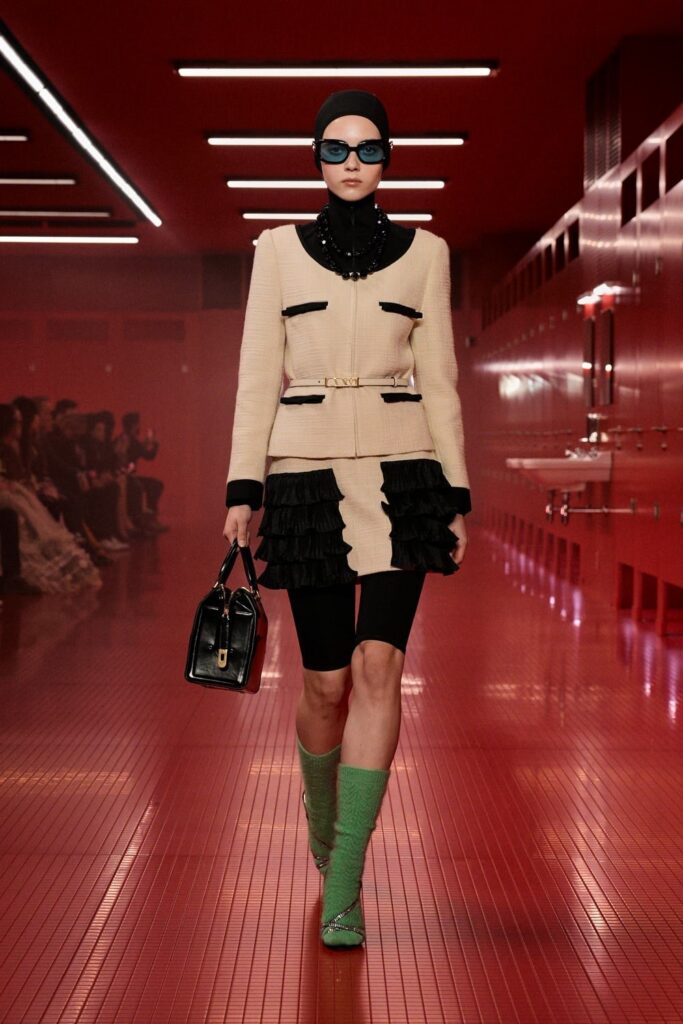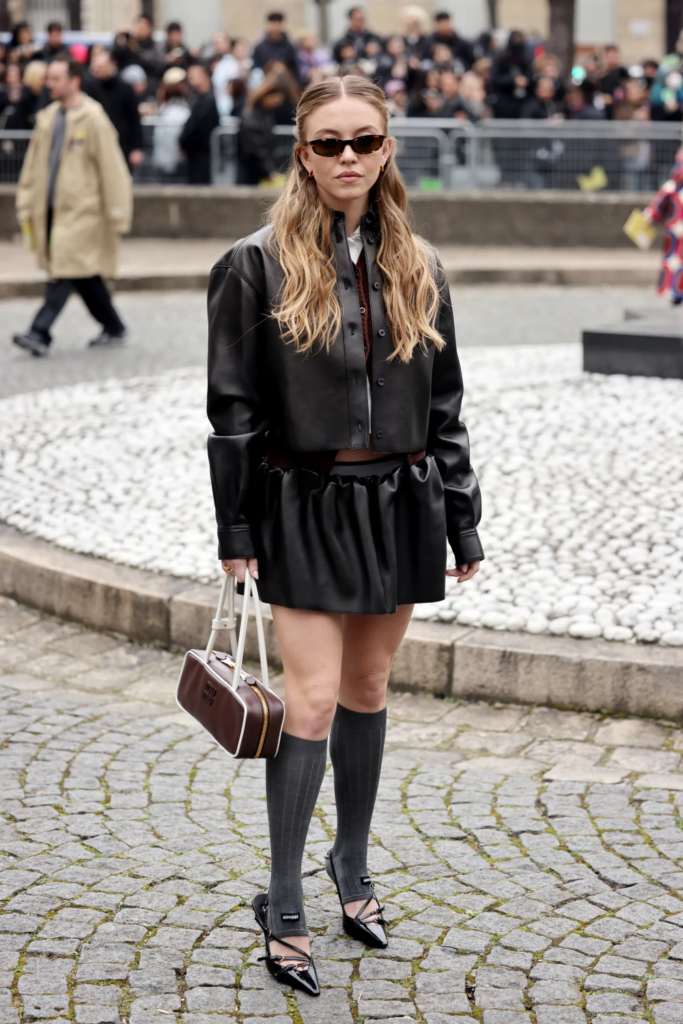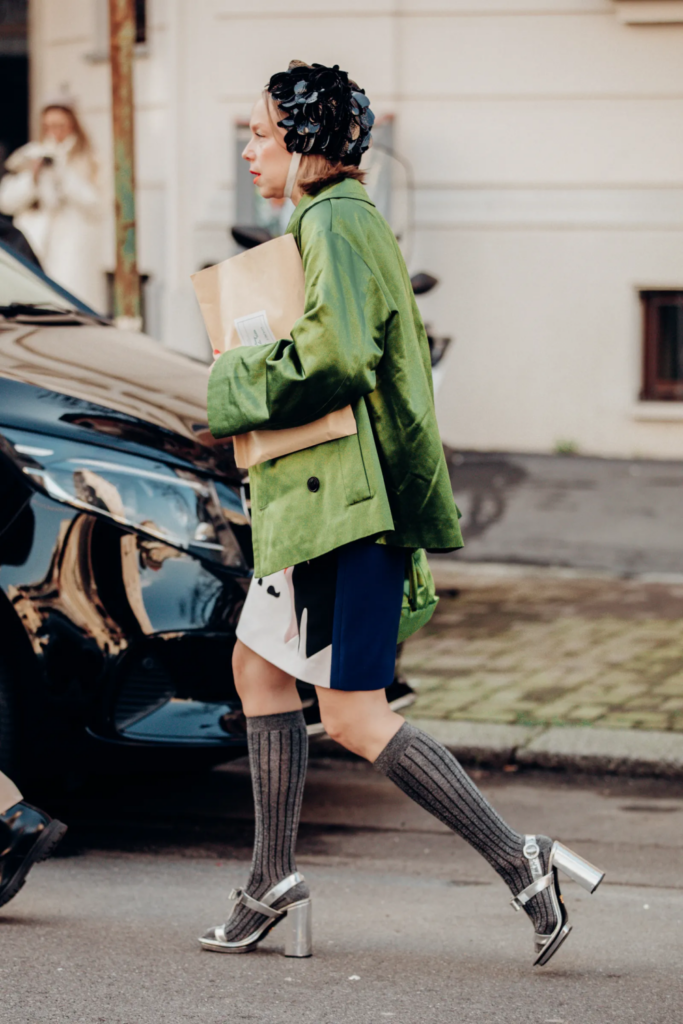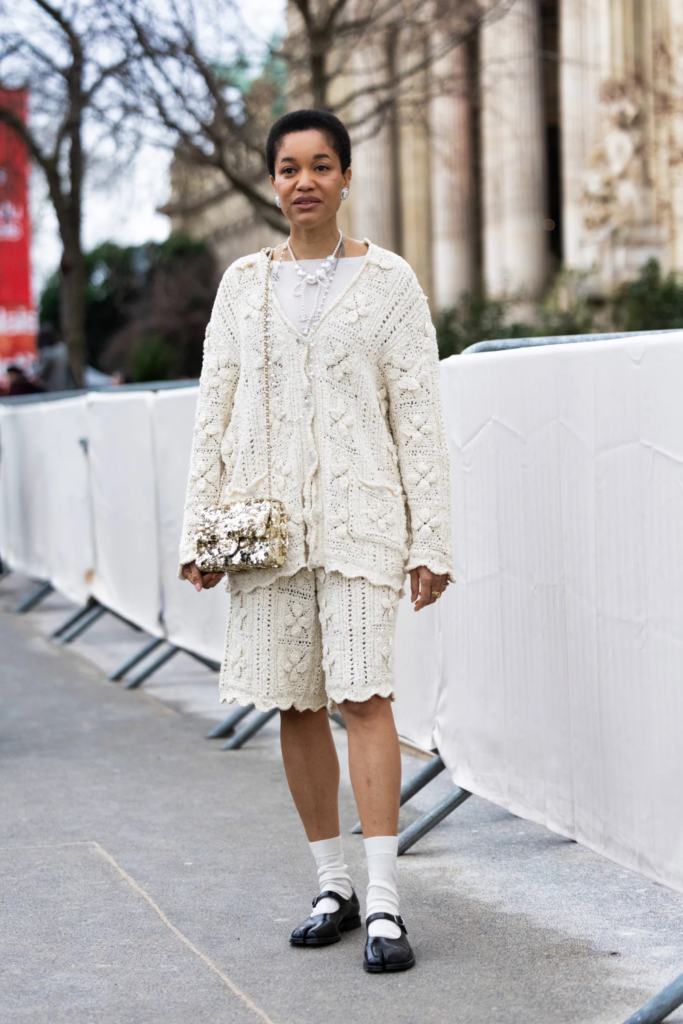
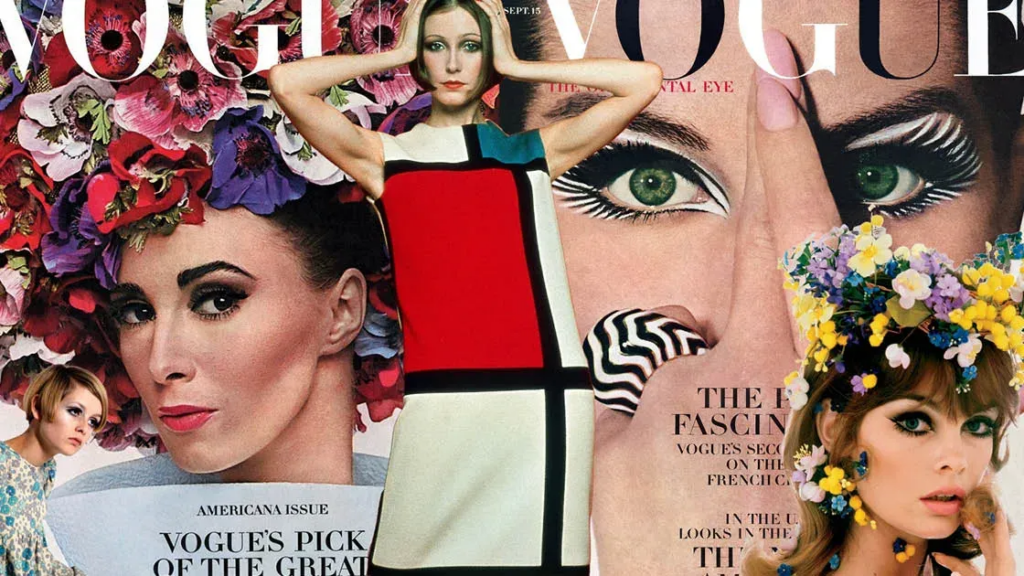
The 1960s truly swung—especially in fashion. First, Jackie Kennedy brought classic style with clean lines and soft pastel colors. Then, Mary Quant and the mods changed everything. They cut their hair short and made mini skirts a bold trend. Meanwhile, the space race inspired futuristic shift dresses with a modern look. At the same time, the hippie movement embraced peace, love, and boho outfits full of folk style. Clearly, there’s much more to explore about 1960s fashion!
A whirlwind recap of the decade, below.
Women’s Trends of the 1960s: The Mini Skirt Arrives
Never before had fashion revealed the knee. Even in the 1920s, flappers kept their knees hidden. However, after Christian Dior lowered hemlines in 1947, skirts slowly began to rise. Then, by the early 1960s, hemlines climbed even higher. Although 1964 is often called the year of the mini skirt, earlier designs paved the way. For example, Cristóbal Balenciaga’s sack dress from 1957 and 1958 hinted at what was coming.
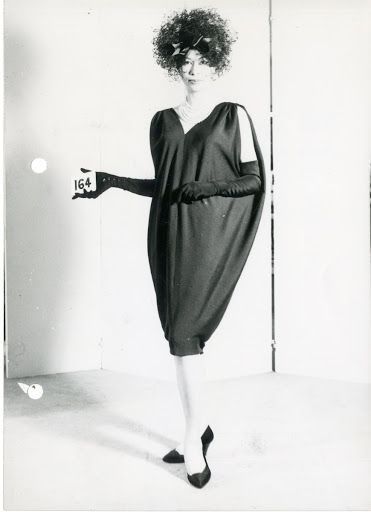
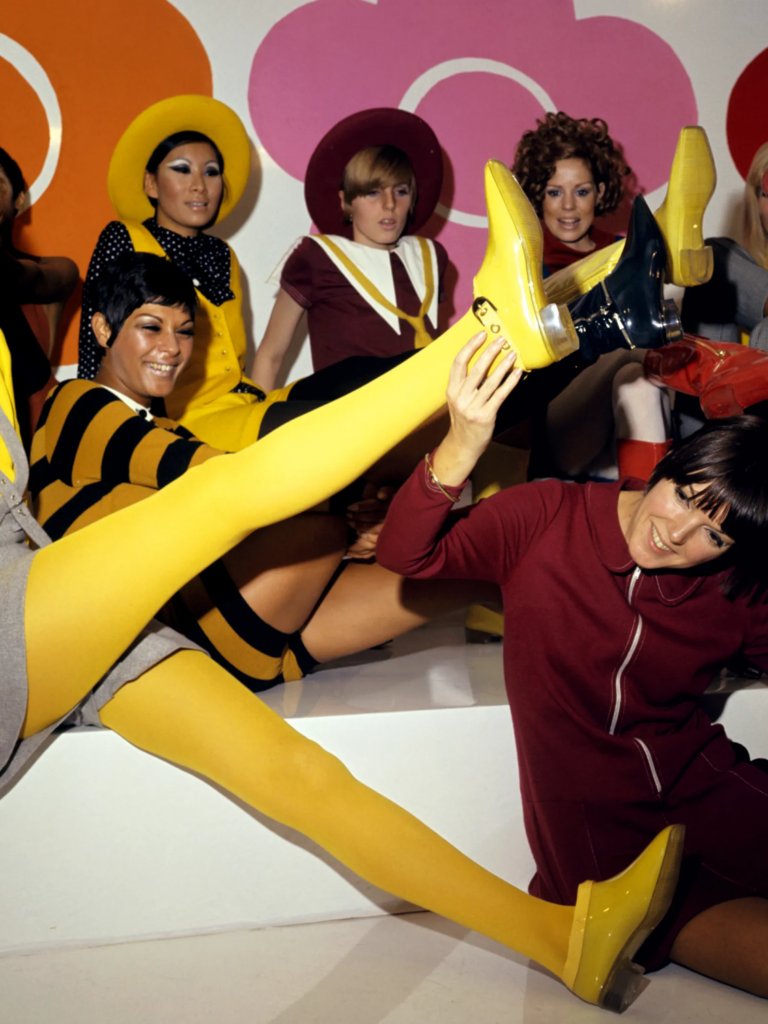
Did Mary Quant invent the mini skirt? Not exactly—but she made it popular. In 1964, her lace dress and affordable prices helped launch the trend. Then, her Mary Quant’s Ginger Group label made the style easy for young people to buy. At first, skirts just skimmed above the knee. But soon, the mini got shorter. By the late 1960s, micro-minis were everywhere. As a result, sheer stockings were out, and tights became the new must-have.
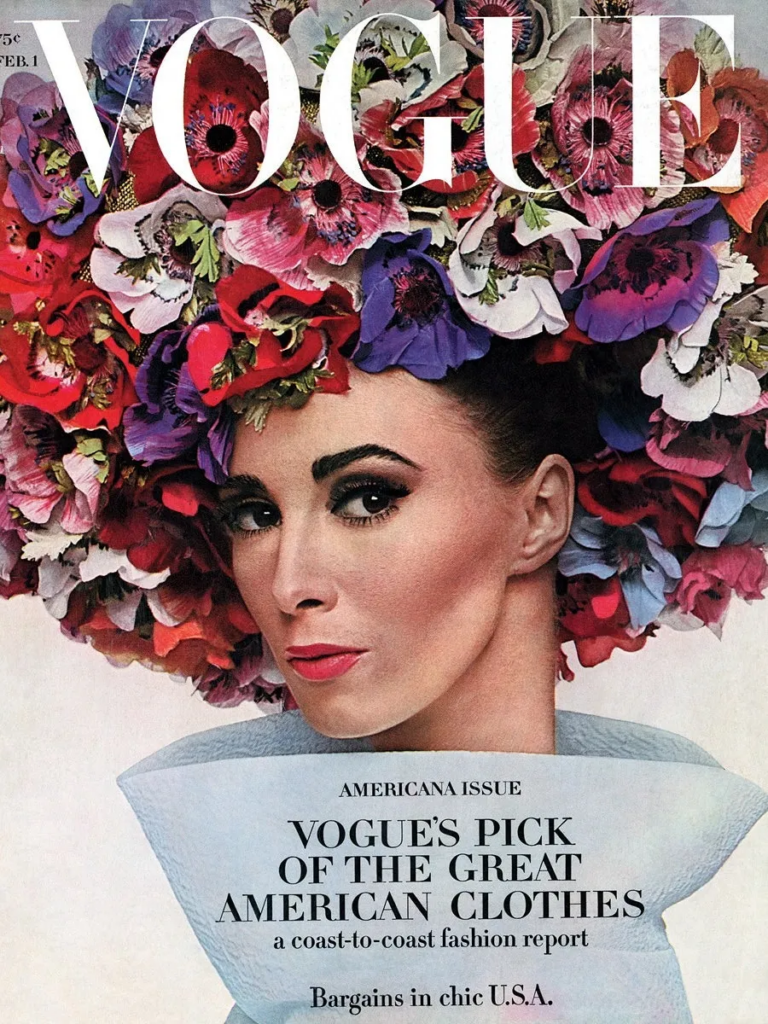
“Legs are still the focus—that’s the big news,” wrote Vogue on August 15, 1966. At the time, hemlines were rising fast. As a result, fashion welcomed a wide mix of skirt lengths. And for legs, it was all good news!
Youth Is the New Black
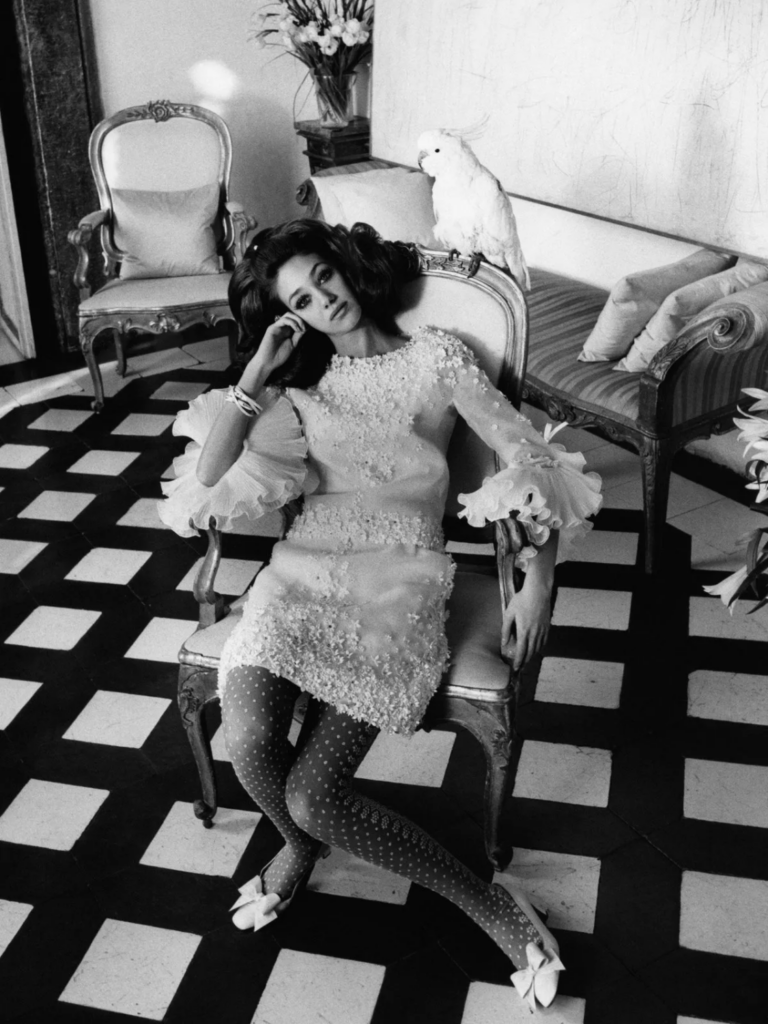
“Youthquake 1965,” declared Vogue on January 1, 1965. At the time, over 90 million young people were reshaping fashion and culture. Coined by Diana Vreeland, the term captured a major shift. Gone were the days of couture queens. In their place came bold, leg-baring girls who loved rock music and lived for the now. As a result, fast fashion was born—with paper dresses, synthetic fabrics, and trendy looks made to wear and toss.
Synthetics Proliferate Fashion
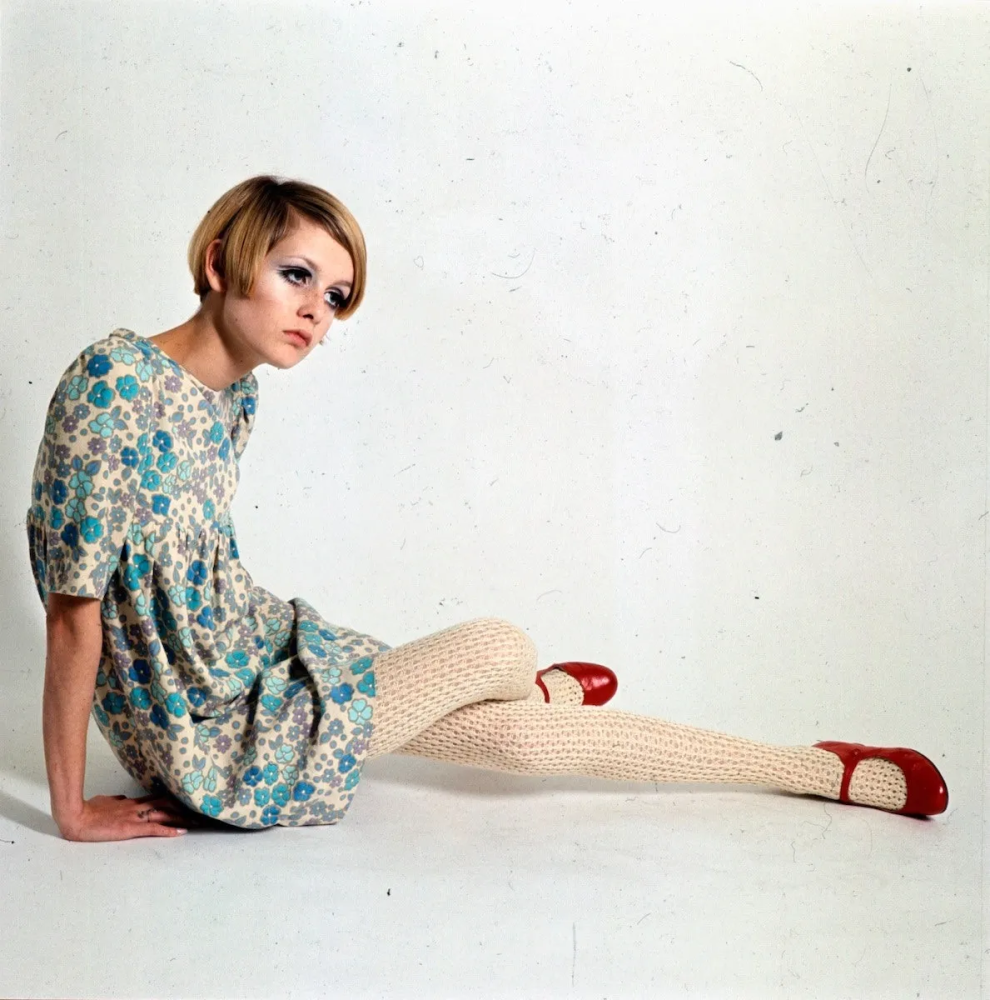
In 1960, the U.S. passed the Textile Fiber Products Identification Act, which required clothing labels to list fiber content. Soon, new synthetic fabrics like Perspex, PVC, polyester, acrylic, nylon, rayon, and Spandex hit the market. Ready-to-wear brands quickly embraced them—especially those targeting young shoppers and busy households. These easy-care, no-iron clothes were a hit. Vogue even marked the moment with a fun article on April 15, 1965. It was truly the start of a new fashion era!
“What’s the hot ticket?” asked Vogue in 1965. Not a Broadway show—but the new fabric label on every dress made in America. Thanks to the Textile Act, each tag listed fiber content clearly, even down to the percentages. Suddenly, names like polyester, acrylic, and triacetate—once sounding like sci-fi—became familiar and trusted. Some clothes used all-natural fibers, others were fully synthetic, but most were smart blends offering the best of both worlds.
The Jackie-Look
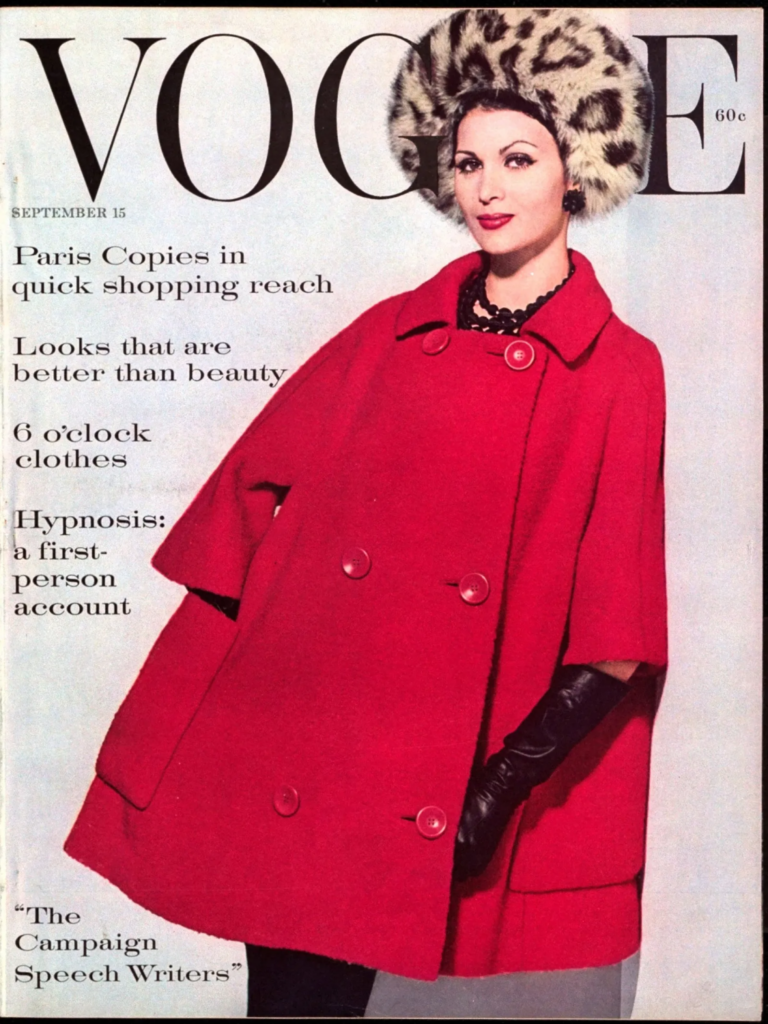
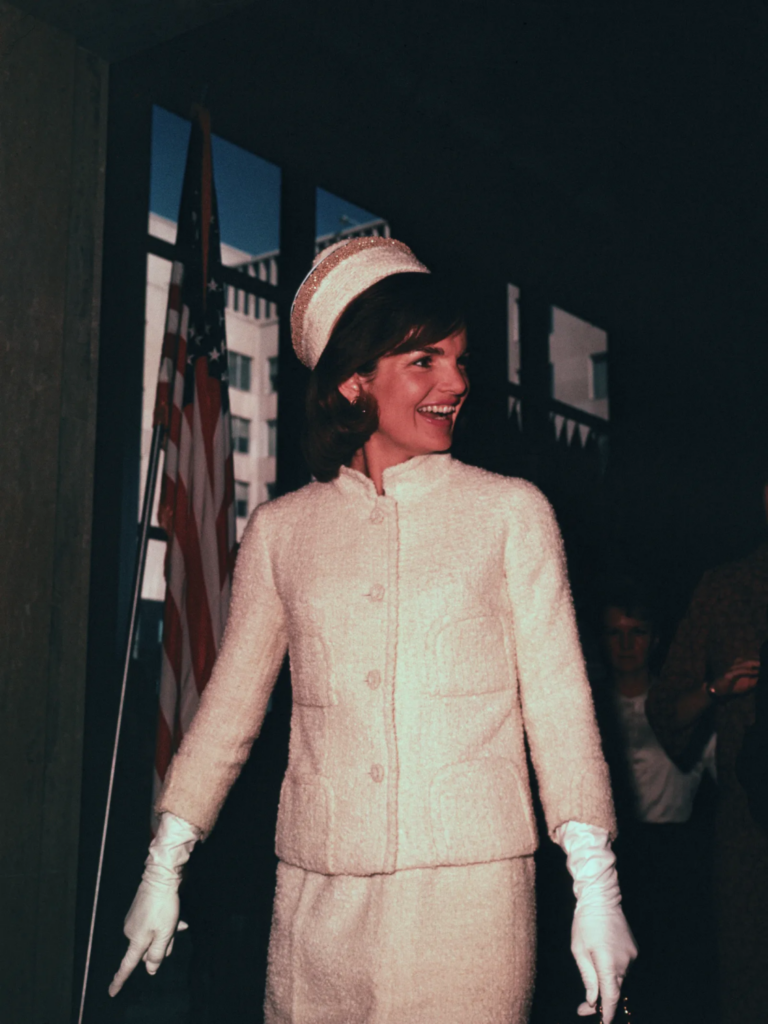
Not all women followed the youthquake trend. Some chose elegance over edge—and their style icon was Jackie Kennedy. While mini skirts and Mary Janes ruled youth fashion, Kennedy defined classic culture. Paris couture houses like Balmain, Balenciaga, and newcomer Givenchy offered refined looks with boxy yet tailored shapes. These designs echoed the Golden Age of Couture (1947–1957), now updated with sleeker lines but still crafted with care.
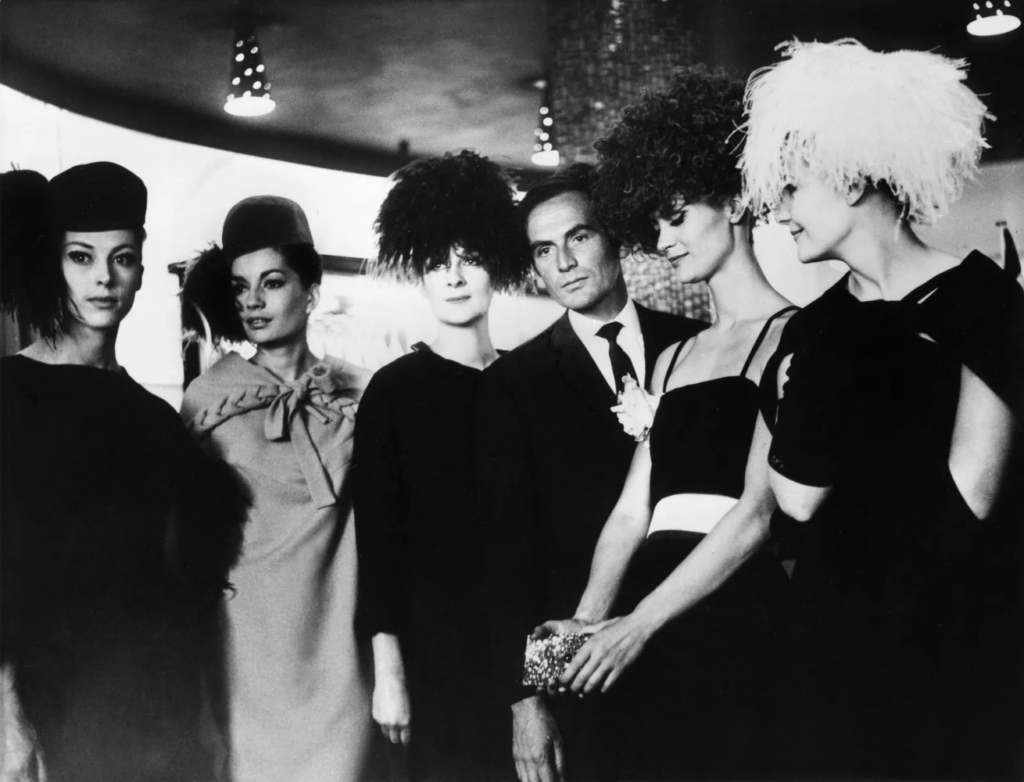
Skirt sets, trapeze silhouettes, and a prim, polished look were popularized by designers like Patou, Saint Laurent, and Pierre Cardin. In the U.S., Norman Norell, Oscar de la Renta for Elizabeth Arden, Chez Ninon, and Oleg Cassini—who became Kennedy’s personal designer—championed these styles.
A Pret-a-Porter and Retail Disruption
The Youthquake sparked a shift in the fashion world. More designers embraced prêt-à-porter, offering diffusion labels at lower prices. By 1959, Ungaro had licensed his name for a ready-to-wear line, and in 1963, Mary Quant launched her Ginger Group. Other designers like Jean Muir and John Bates also joined the ready-to-wear movement.
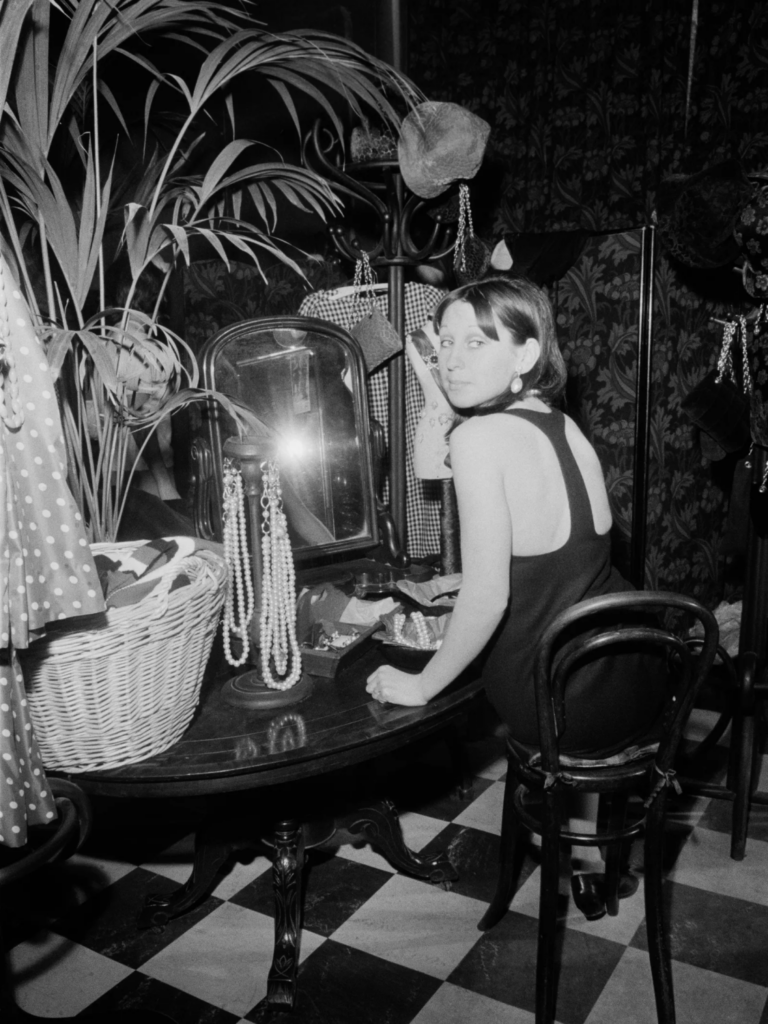
The rise of RTW designers brought a new shopping experience. Instead of just department stores or couture salons, boutiques became the heart of youth culture in London, New York, and Paris. In London, Biba’s art nouveau interiors on Abingdon Road attracted the Mods, while Carnaby Street featured menswear shops with fresh takes on classic styles. In New York, Betsy Johnson brought energy to Paraphernalia on Madison Avenue, offering affordable, bold pieces modeled by Edie Sedgwick.
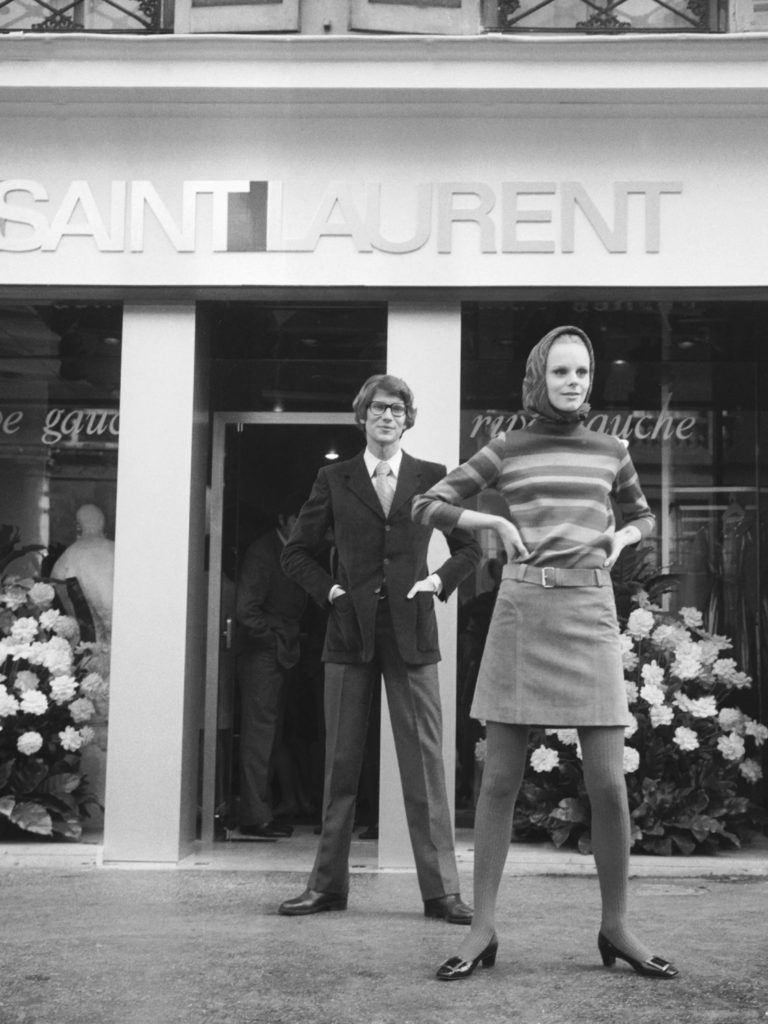
On September 19, 1966, Yves Saint Laurent opened his ready-to-wear boutique, Saint Laurent Rive Gauche, in Paris. By doing so, he became the first couturier in France to launch a highly successful ready-to-wear line.
1960s Beauty Trends
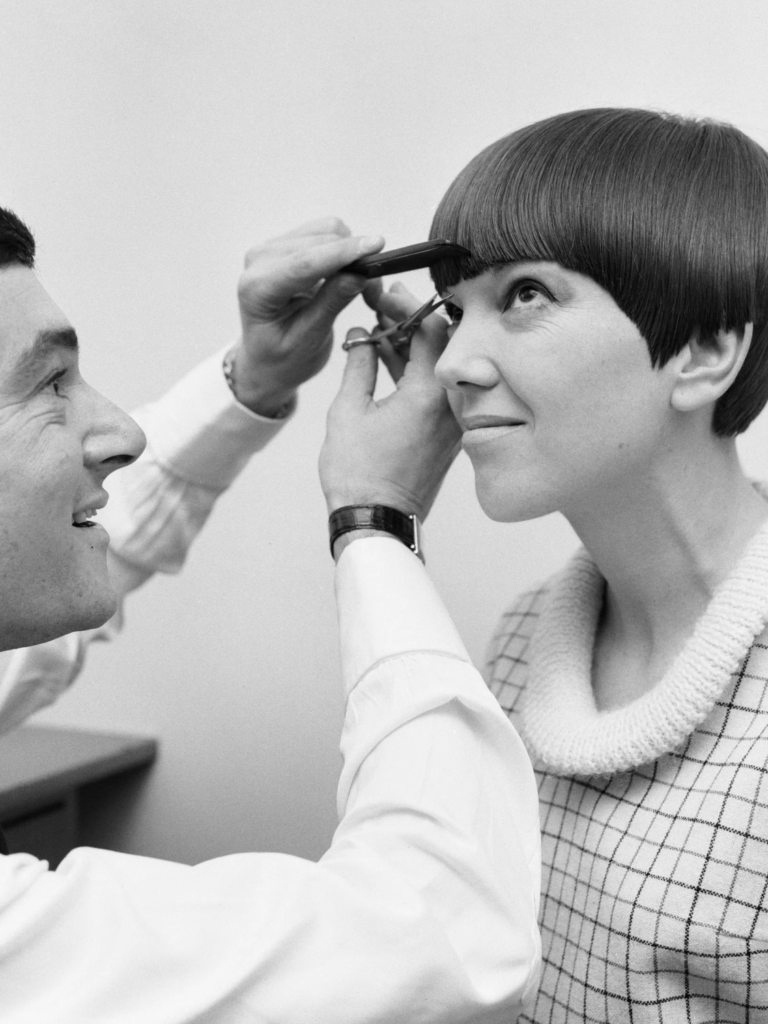
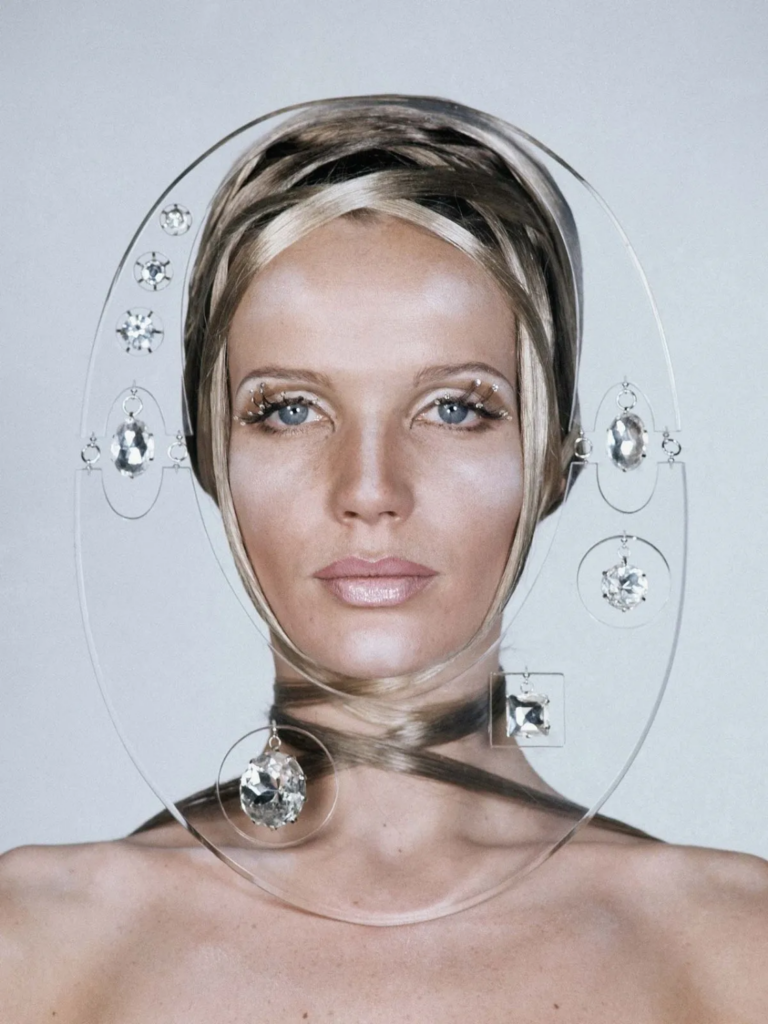
In beauty, the mod look was all about short, helmet-like hair. Vidal Sassoon’s asymmetric five-point cut for model Peggy Moffitt made a big splash, as did his iconic cut for Chinese-American actress Nancy Kwan.
Vogue raved on October 15, 1963: “We love the cut Nancy Kwan just received from Vidal Sassoon of London. As one of the masters of the new hair movement—believing hair should move and comb easily—this brilliant young hairdresser has a system he’ll share with anyone who asks.”
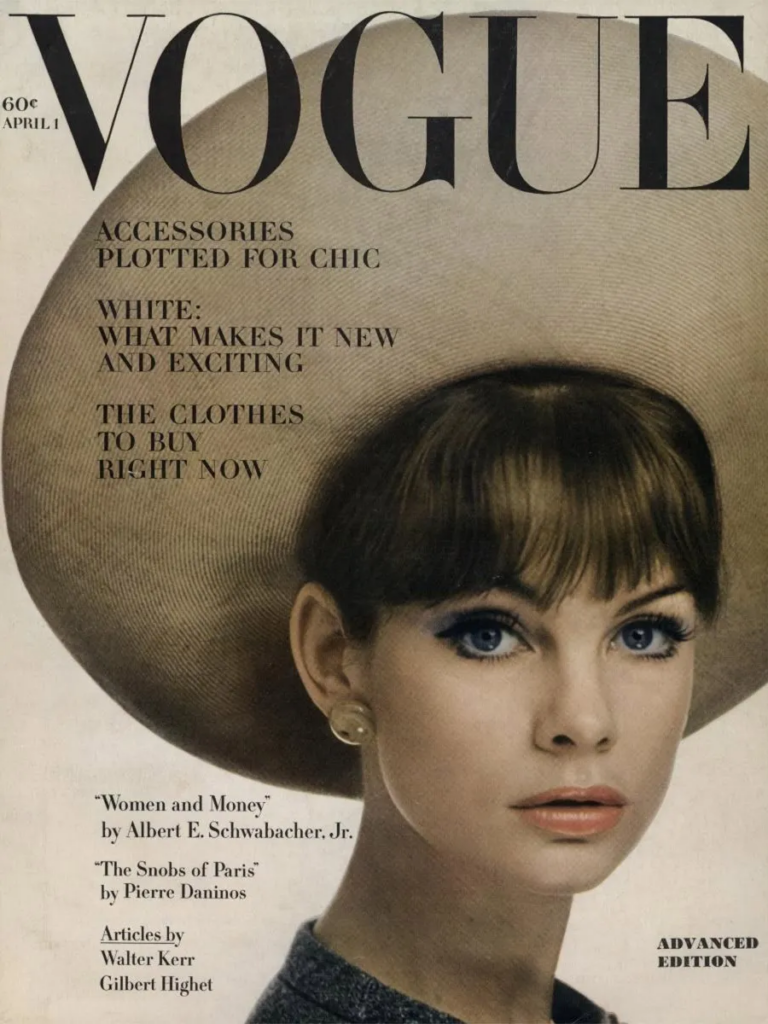
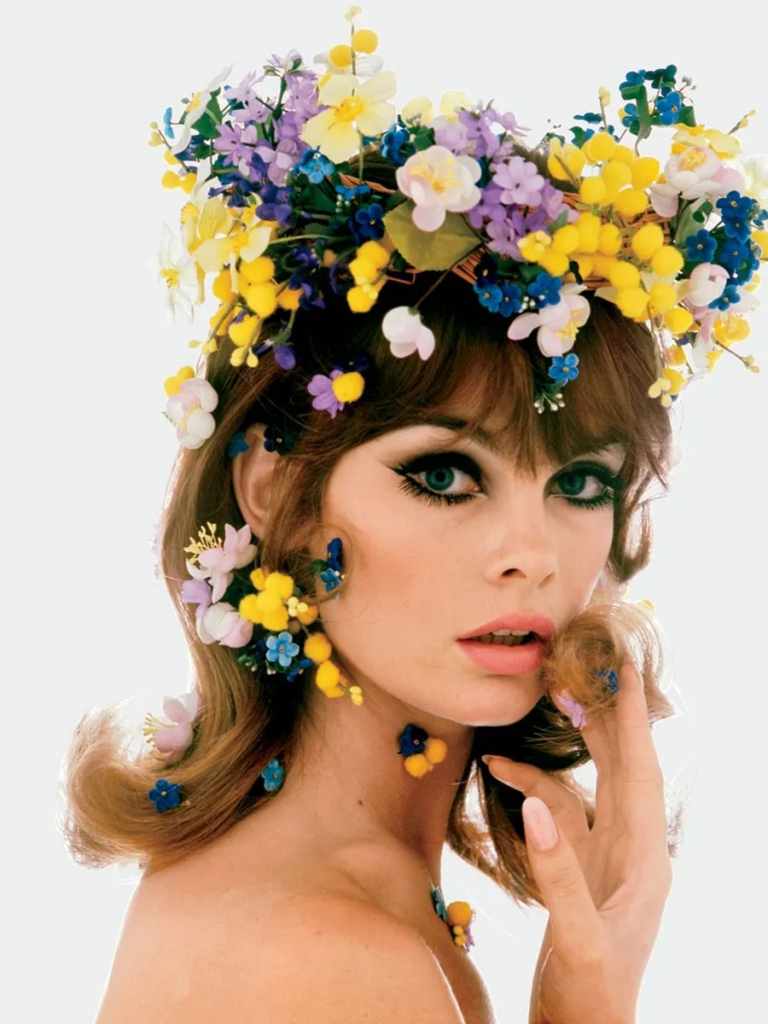
Mary Quant and Mia Farrow both rocked the mod look, with Farrow’s iconic pixie cut courtesy of Vidal Sassoon. For those not opting for a cropped style, youthful bangs were in—like Jean Shrimpton’s, full of volume and a flipped, ski-slope finish at the ends.
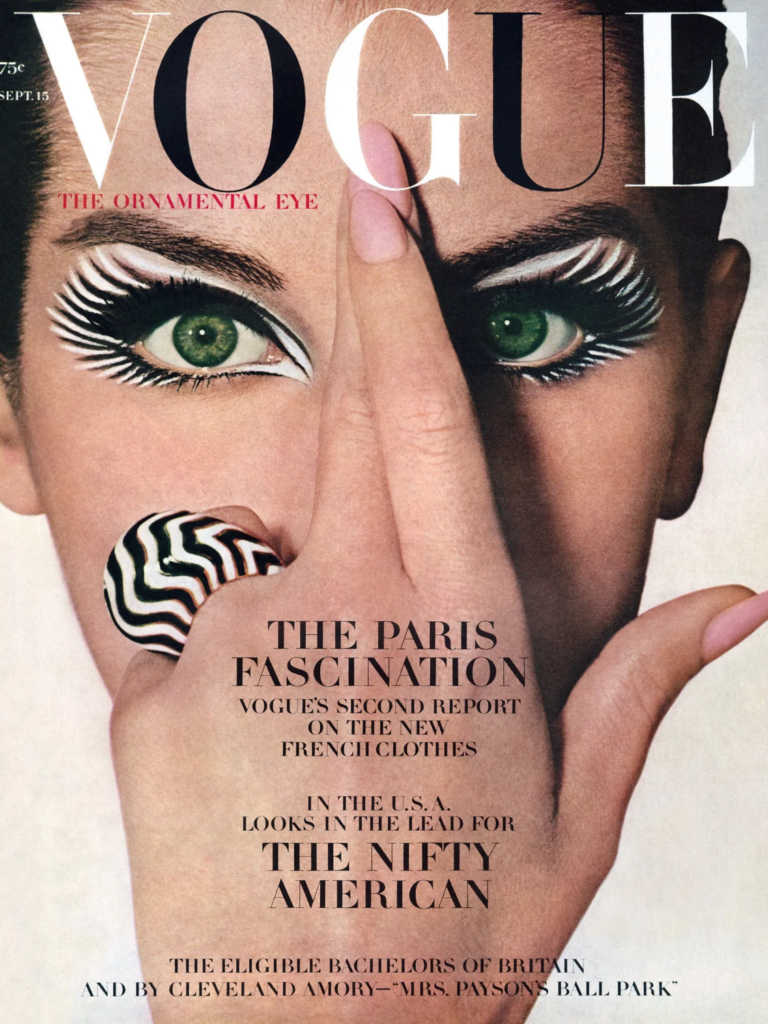
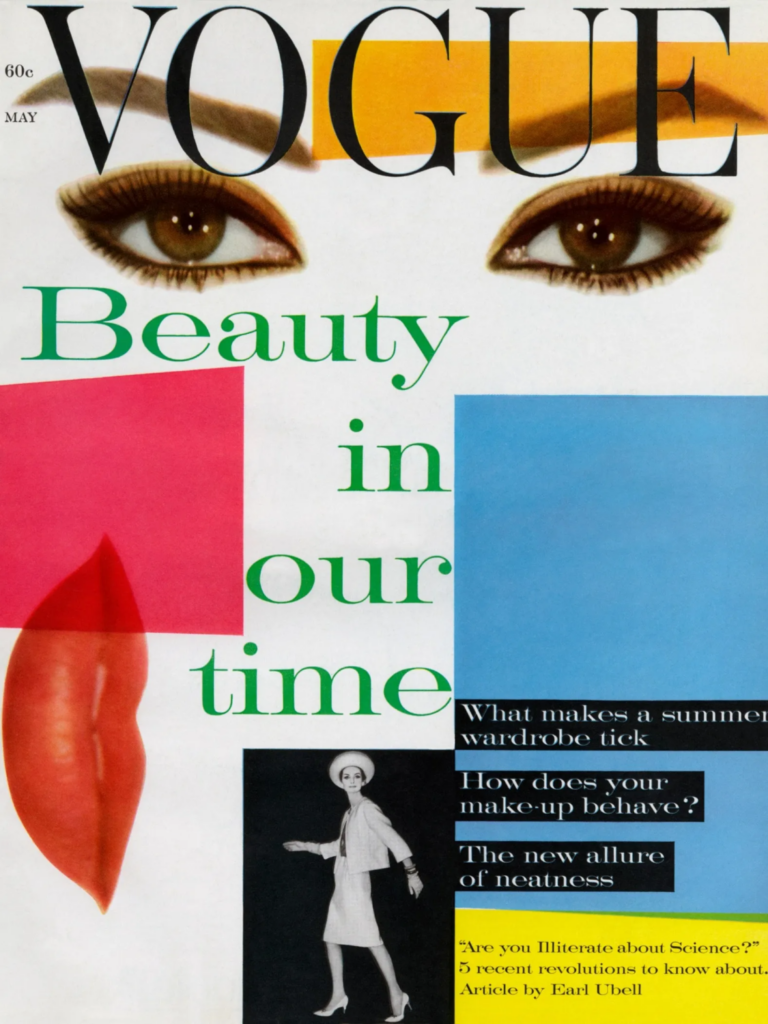
The cosmetics industry exploded during this time, with technology enabling mass production of eyeshadows, mascaras, and lipsticks. Eyes became the focal point, complemented by softer lipstick shades that highlighted bold lashes and kohl-rimmed eyes.
All Hail Saint Laurent
All Hail Saint Laurent
If one designer defined the 1960s, it was Yves Saint Laurent. Though his 1960 collection for Dior led to his dismissal—and a stint in the army for the Algerian War—it was revolutionary and ahead of its time. Dubbed the Beatnik collection, Saint Laurent drew inspiration from Paris’s bohemian Left Bank, blending biker jackets and artistic tunics in couture construction. He was among the first to recognize the influence of culture on fashion. By 1962, with the support of Pierre Bergé, he debuted his own collection under his name.
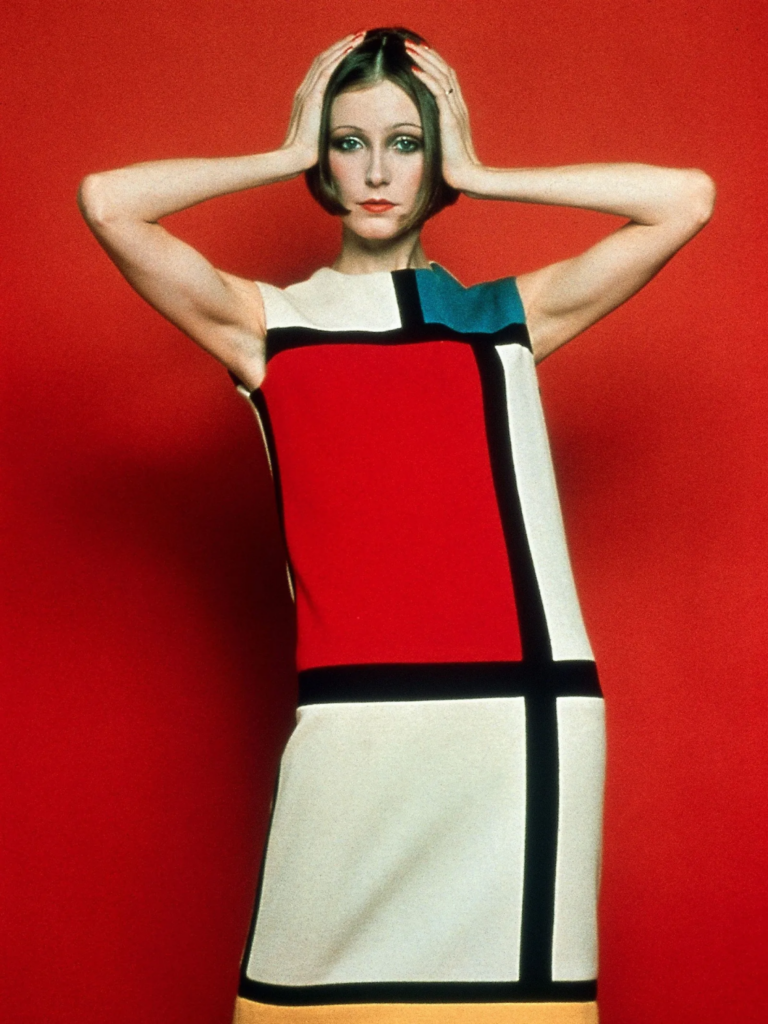
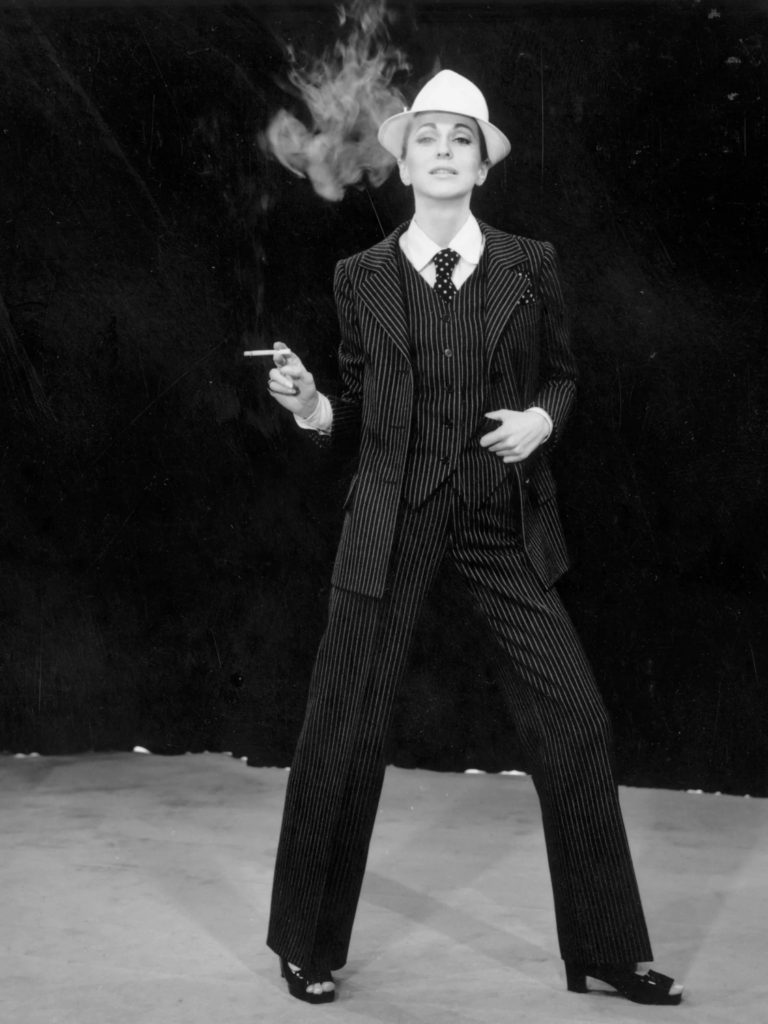
In just a few years, Saint Laurent revolutionized fashion with true icons. In 1965, he introduced the Mondrian-inspired shift dresses, proving he could outdo even Swinging London’s designers. In 1966, he debuted the gender-defying Le Smoking tuxedo for women. Then, in 1967, his safari-inspired collection, captured in a stunning Richard Avedon shot of Veruschka, made waves. And this was just the beginning for Saint Laurent.
Enter: Space Age
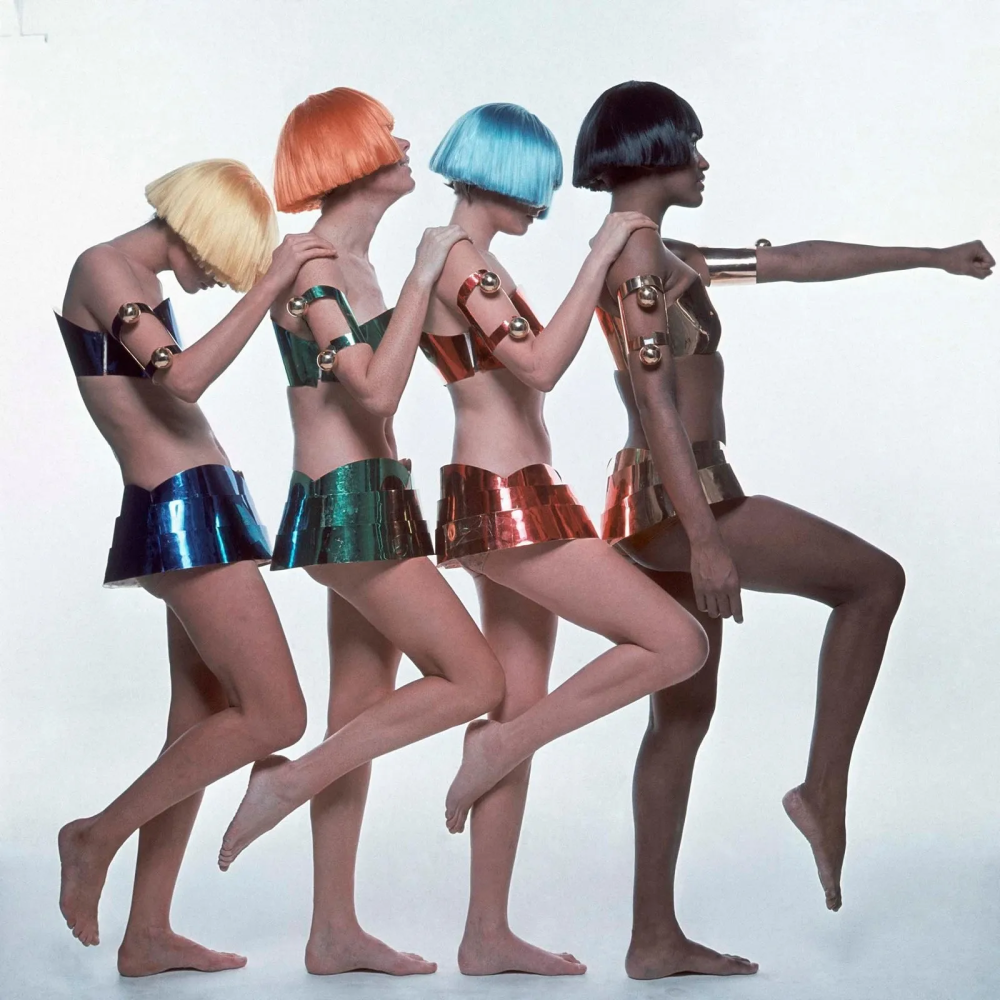
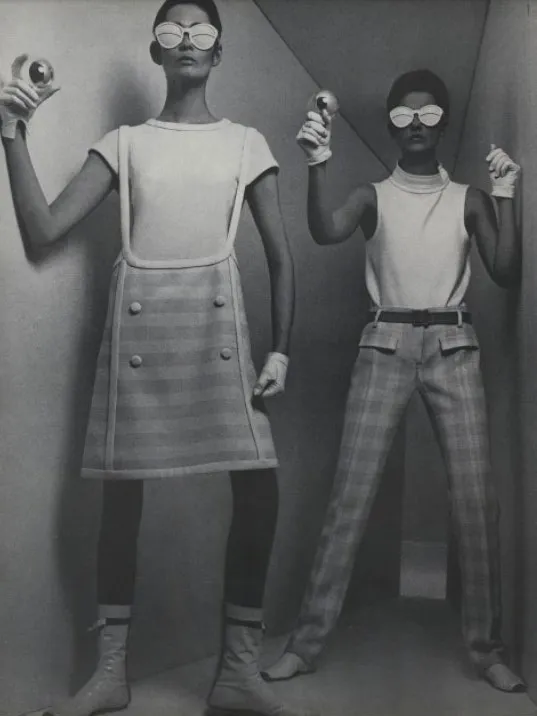
While the U.S. landed on the moon in 1969, space-age fashion took off years earlier. Inspired by the era’s fascination with space exploration, designers like André Courrèges, Paco Rabanne, and Pierre Cardin embraced the “Atomic” style movement. Courrèges’ Spring/Summer 1964 Space Age collection featured silver vinyl, PVC moon girl outfits, astronaut hats, goggles, and mid-calf boots. In 1966, Cardin introduced pinafore dresses worn over slinky turtlenecks and knots, pushing fashion into the future.
Enter Hippie Culture
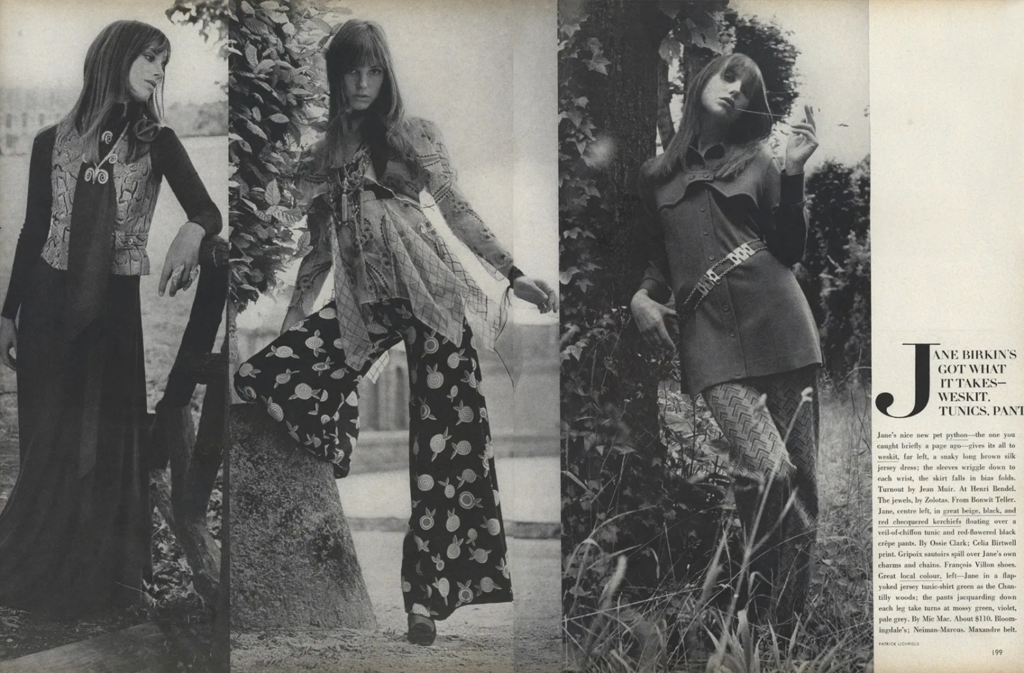
By the end of the 1960s, growing disapproval of the Vietnam War and a push for civil rights sparked a movement centered on peace and love. On college campuses, students protested the war, while in Alabama, the 1965 Selma Marches fought for Black Americans’ right to vote. In 1967, thousands of hippies gathered in San Francisco’s Haight-Ashbury district for the Summer of Love. Then, in 1969, Woodstock became a landmark event in upstate New York. Fashion embraced bohemian maxi dresses in floral prints, loose, flowing silhouettes, and folkloric styles with Eastern European influences.
Initially, this aesthetic was seen as part of the sub-culture. However, by the mid-1970s, elements of the look began appearing on high-fashion runways.
Top Designers of the 1960s
Some of the most influential designers of the 1960s include Yves Saint Laurent, Balenciaga, André Courrèges, Paco Rabanne, Mary Quant, Barbara Hulanicki, Roberto Capucci, Pierre Balmain, Oleg Cassini, Rudi Gernreich, Norman Norell, Nettie Rosenstein, Vera Maxwell, Hubert de Givenchy, Emilio Pucci, Claire McCardell, Bonnie Cashin, Pauline Trigère, Hardy Amies, Norman Hartnell, and Pierre Cardin.
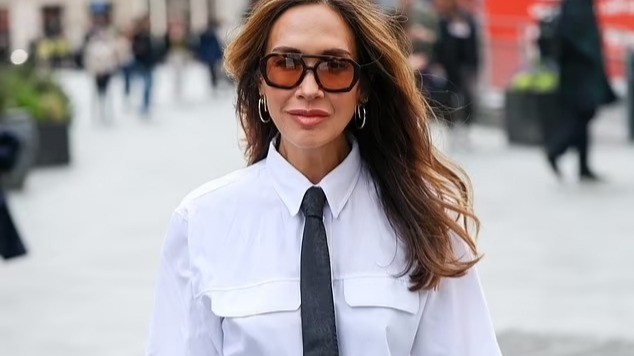
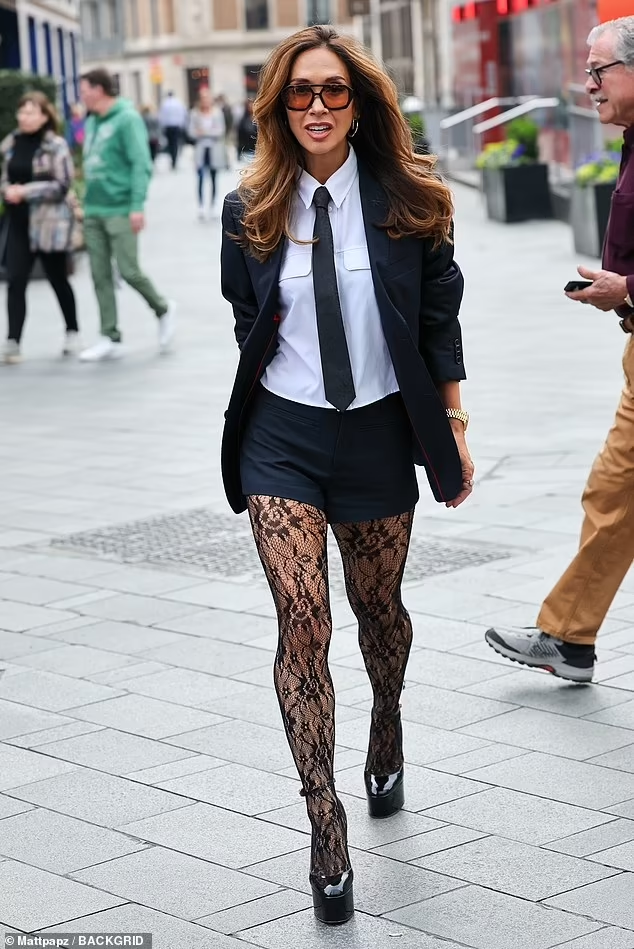
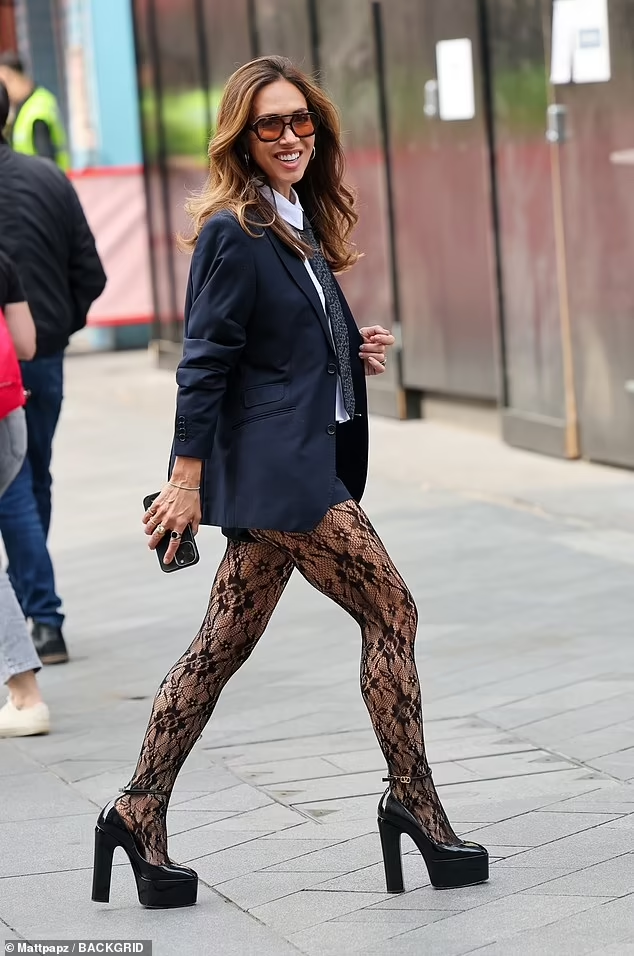
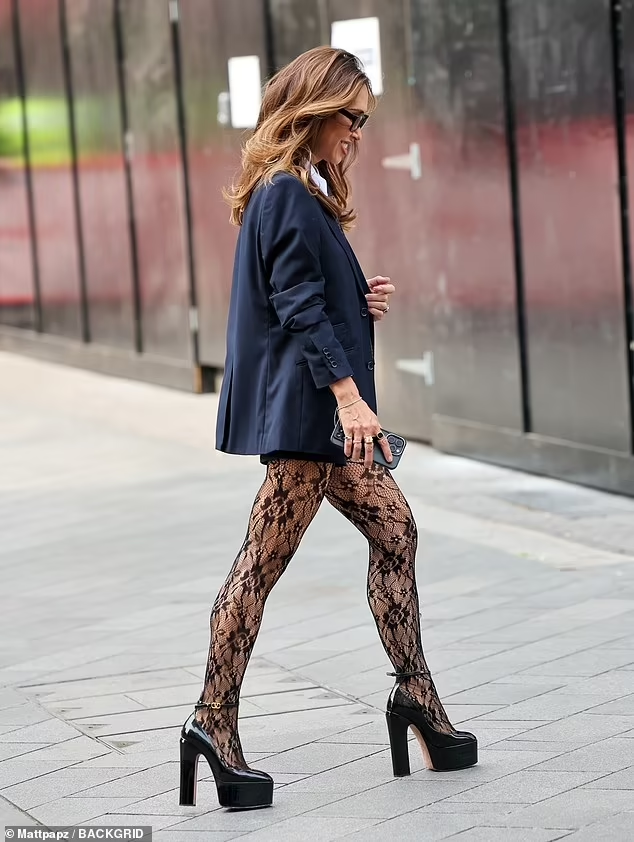
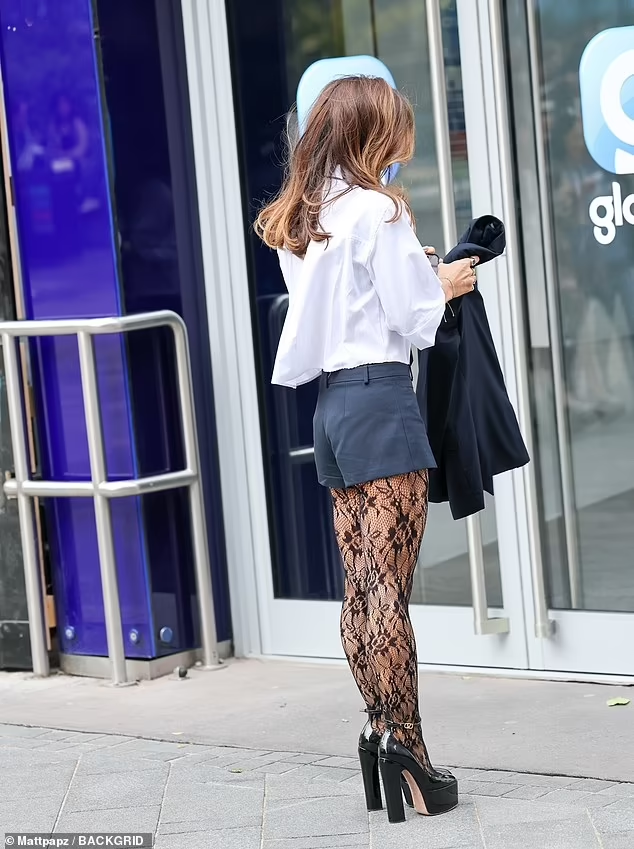
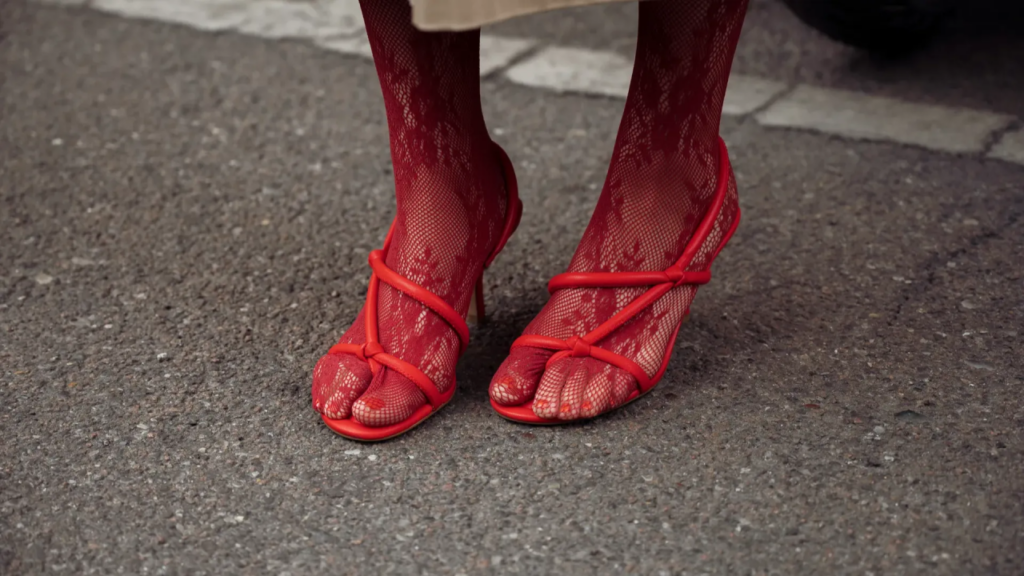
 If Kate Moss says fishnets are back, then they must be!